
WELL Coworking Rating Enhances Workplace Wellness Initiatives
Written with artificial intelligence.
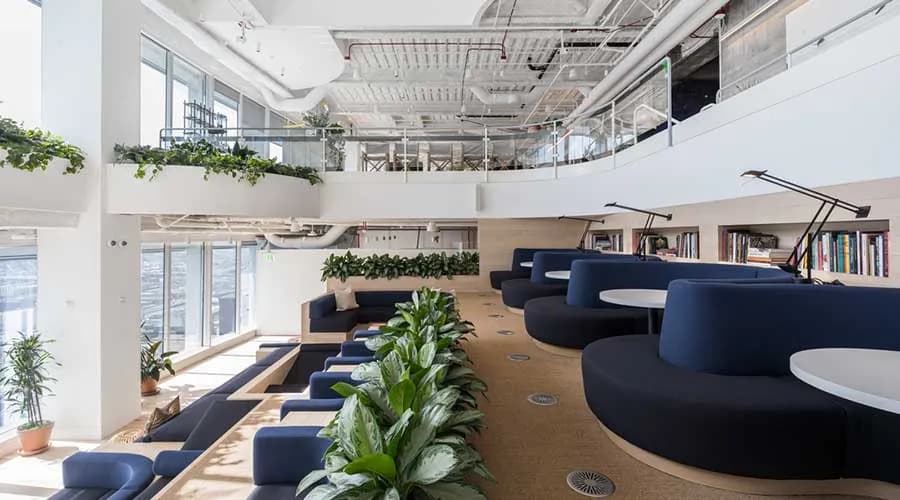
Organizations are increasingly adopting the WELL Coworking Rating to improve workplace wellness across diverse facilities. WeWork has committed over 300 locations globally to this rating, impacting the experience of more than 550,000 members annually.
Adoption of the WELL Coworking Rating
Many organizations in the United States are now implementing the WELL Coworking Rating to enhance workplace wellness. WeWork, a prominent global real estate platform, has pledged to pursue this rating across more than 300 locations worldwide, representing about half of its global portfolio. This initiative is set to benefit over 550,000 members who utilize WeWork spaces each year.
Benefits of the Rating
Ebbie Wisecarver, WeWork's chief design and product officer, highlights that the standards established by the WELL Coworking Rating offer clear benchmarks for workplace quality and well-being. This consistency allows members to expect a similar quality of experience regardless of their location. Additionally, various coworking operators from cities like New York, Boston, and Vancouver to international locations like Manila and Nairobi are embracing the rating, signaling a shift towards prioritizing health in flexible work environments.
Implementation Strategies
Building owners and facility managers can leverage the principles of the WELL Coworking Rating even if their buildings are not coworking spaces. Key steps include:
- Assessing building performance against WELL concepts to identify gaps.
- Establishing measurable baselines by reviewing ventilation, lighting, and thermal comfort.
- Implementing operational policies that enhance health, such as cleaning protocols and community engagement.

Feedback from occupants can also be invaluable in identifying subtle issues that may not be apparent through building systems alone.
Ongoing Commitment to Wellness
Workplace wellness should be viewed as a continuous effort rather than a one-time project. As hybrid and flexible work models evolve, maintaining a healthy workplace requires attention to changing needs and expectations. Over the next decade, workplace wellness is anticipated to become integral to the overall workplace experience, moving beyond mere amenities to become a core aspect of facility design. The ultimate goal is to create environments that consistently support employee performance and well-being.