
Big Bang Nucleosynthesis: A Resurgence in Cosmology
Written with artificial intelligence.
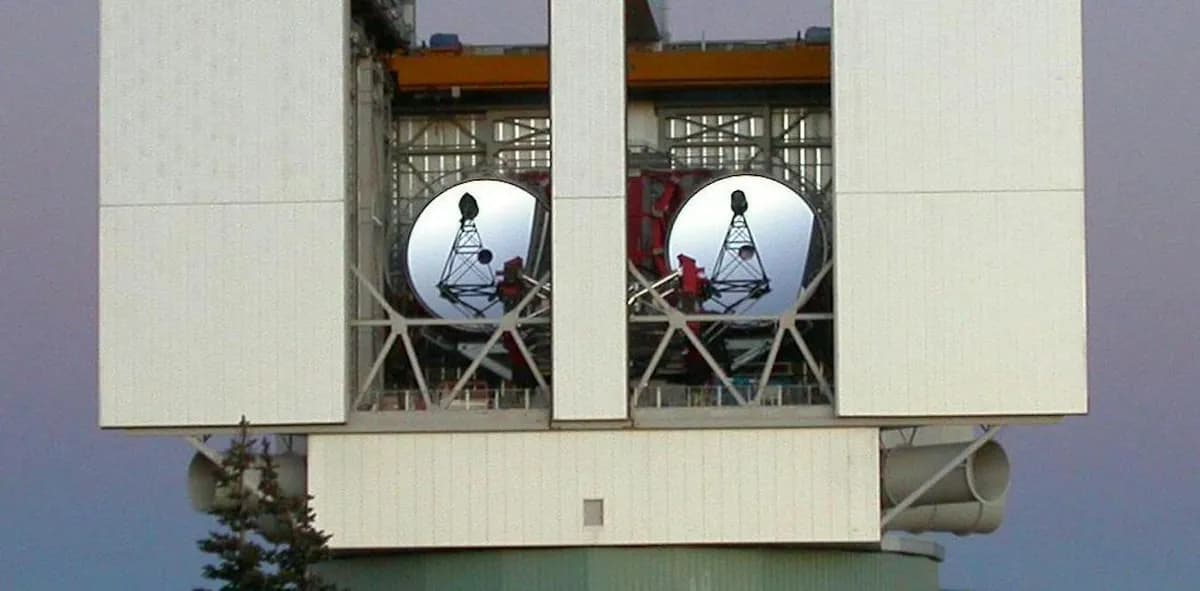
Recent advancements in measuring primordial helium-4 have highlighted the significance of Big Bang Nucleosynthesis (BBN) in cosmological research. This process is proving to be a valuable tool for understanding the early universe, potentially surpassing the insights offered by the Cosmic Microwave Background (CMB).
The Revival of Big Bang Nucleosynthesis
In the field of cosmology, an intriguing shift is taking place as Big Bang Nucleosynthesis (BBN) gains renewed attention among researchers. Traditionally overshadowed by the Cosmic Microwave Background (CMB), BBN is now showing its potential to provide crucial insights into the early stages of the universe. This change is partly due to a recent measurement of primordial helium-4 that offers unprecedented precision.
Understanding BBN and Its Importance
BBN occurred just minutes after the Big Bang, during which protons and neutrons fused to form the nuclei of light elements, including helium-4. This process is vital as it helps scientists determine the abundance of various elements created in the early universe. A newly published measurement of helium-4 has provided a level of detail that allows researchers to glean more about the conditions of the universe shortly after its inception.
Implications for Dark Matter Research
The ability to measure helium-4 abundances accurately allows scientists to infer the amount of radiation present in the early universe. This measurement is crucial for particle physicists studying dark matter, which makes up a significant portion of the universe's mass. By understanding the radiation levels, researchers can distinguish between different models of dark matter and test theoretical predictions against actual observations.
A Shift in Cosmological Tools
While the CMB has been the primary tool for probing the universe’s early conditions, BBN is emerging as an equally significant player. As the Simons Observatory begins its observations, researchers anticipate that BBN will continue to enhance our understanding of cosmic history without the need for new dedicated observatories. This shift highlights the importance of utilizing existing telescopes to investigate and refine measurements of BBN, potentially leading to groundbreaking discoveries about the universe's structure and evolution.